Providing Remediation: How College Professors Can Help All Students Succeed

by Earlesha Butler
Ph.D student, University of Florida

Earlesha Butler

Earlesha Butler

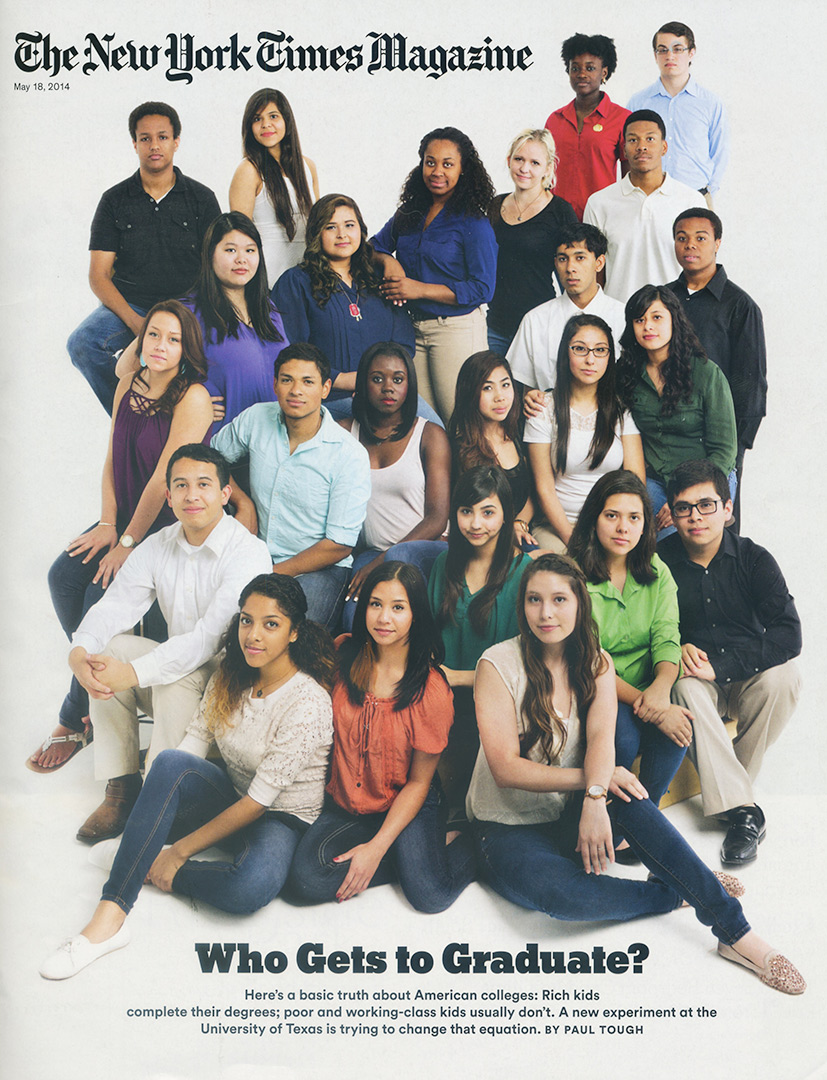
Offering remediation, or academic assistance, to students is nothing new for state and private universities. Because some states have cut or reduced funding for student remediation, students who’d typically enroll in fundamental classes to enhance their academic skills are now in courses with peers who may be advanced.

Federal statistics show that 19 to 26 percent of all college freshmen require help to overcome remedial needs, according to the Education Commission of the States – an organization that follows policy updates.

The reasons students may require more academic help vary. For example, students may have scored below average on national exams like the ACT or SAT. Or, students may need additional academic assistance because they’re first-generation college students, which mean no one in their immediate family is a college graduate. These students tend to have no one in their families to rely on for help and they may loose motivation or quit school altogether, due to lack of support. Lastly, life disruptions happen and college students fall behind in their schoolwork. So college professors have to be ready to provide help as needed.

Continue reading

Experiential education enhances active learning for college students

by Baobao Song
Ph.D. student, University of Florida

Tell me and I forget, teach me and I remember, involve me and I will learn.
                                        — Benjamin Franklin

Baobao Song

Baobao Song

Experiential education is a major approach to create immersive experience for students and encourage active learning in higher education. According to Association for Experiential Education (AEE), experiential learning is “a philosophy and methodology in which educators purposefully engage with students in direct experience and focused reflection in order to increase knowledge, develop skills, and clarify values.” The definition has two implications for instructors:

  1. Grasp knowledge through direct experience: Use ill-defined, complex, real-world situations, problems, or actions to the extend possible.
  2. Transform knowledge through focused reflection: Offer feedback to students and encourage self-evaluation and retrospection.

Continue reading

Your Friend, The Rubric — How rubrics can assist you as a college instructor

by Rich Shumate
Ph.D. Student/Teaching Assistant, University of Florida

Rich Shumate

Rich Shumate

Rubrics can an effective tool to use for assignments that are being assessed subjectively, including writing assignments, term papers, performances, photography or artwork, and journalism.

Even though you are grading subjectively, rubrics can provide structure to your grading to make is less subjective.

Rubrics also provide consistency to your grading, which makes if fairer for students.

Continue reading

Tips for using videos to enhance college teaching and learning

by Kelly Flowers-Rose
Ph.D. student, University of Florida

Kelly Flowers-Rose

Kelly Flowers-Rose

Undergraduate students have an attention span on average of 20 minutes. Therefore, college instructors need to be able to engage these students by interspersing different teaching techniques. These can include, but are not limited to, class discussion, small group work, written assignments or use of videos. By using videos in higher education classes an instructor can

  • Reinforce reading and lecture material
  • Aid in the development of a common base of knowledge among students
  • Enhance student comprehension and discussion
  • Provide greater accommodation of diverse learning styles
  • Increase student motivation and enthusiasm
  • Promote teacher effectiveness

The rules governing use of video materials for face-to-face teaching provide more flexibility concerning copying, displaying, and distributing copyrighted materials in the classroom  — http://www.baylor.edu/copyright/index.php?id=56543#classroom.

You may show a video in your class without obtaining permission by conducting a fair use evaluation. A quick evaluation to determine if videos you would use in your classroom should meet ALL the following requirements:

Continue reading

Knowing your students can help you be a more effective teacher

by Julie Dodd

nyt_cover_wAn important part of developing an effective undergraduate course is knowing your students.

Why are students taking your course?
Is this a required course? Is the course a prerequisite for another course students want or need to take?

What academic background are students bringing into your course?
What courses have they had at the college level before taking your course? What courses did they have in high school? And we, as college teachers, need to be aware that every student — even if they have the same course on their high school or community college transcript — has not had the same learning experience.

Continue reading

‘Rebooting the Academy’ profiles innovators in higher education

by Julie Dodd

Rebooting the AcademyWhat are some of the trends in higher education and how are those affecting teaching, learning and jobs in higher education?

We’re going to discuss those issues in Mass Communication Teaching on Monday, Sept. 8, when we talk about “Rebooting the Academy.”

This was The Chronicle of Higher Education’s first e-book. Published in 2012, “Rebooting the Academy: 12 Tech Innovators Who Are Transforming Campuses” is a collection of profiles of innovators in higher ed — very few of whom are faculty members.

I’ve found it interesting to revisit the book this fall, seeing how those innovations are playing out two years later. I’m interested in hearing what the class considers to be the most exciting or most concerning developments, as they plan for careers in higher education.

Planning is key step for effective teaching — advice to new teaching assistants

University of Florida's New Teaching Assistant Orientation

More than 400 University of Florida graduate students attended the New Teaching Assistant Orientation, held in Carleton Auditorium. Photo by Julie Dodd

by Julie Dodd

The more than 400 new teaching assistants at the University of Florida have been busy preparing for the start of school by attending the New Teaching Assistant Orientation. I enjoyed being part of the team of faculty members, administrators and teaching assistants who made presentations for the orientation.

My presentation was “A Positive Start to Your Teaching: Your Syllabus and the First Week of Class.” You can download the PDF handout of the slides (5MB) – dodd_2014_UF_TA_orientation_slides

[You can check the UF Teaching Resources tab at the top of the blog for a list of links to helpful teaching resources, including syllabus policies and the UF Undergraduate Catalog.}

I appreciated everyone participating in the short peer-to-peer discussions on topics related to teaching. Thanks to those of you who asked questions, which included:

  • What activities can you use to learn student names?
  • What are tips for international teaching assistants for whom English is not their first language?
  • What advice do you have for how to avoid discipline problems that can be caused by cellphones?

Preparing for the presentation is always helpful for me, as talking about planning for teaching success helps me in my own class planning.

Thanks to Drs. Paul Duncan, Winifred Cooke and Rhonda Moraca for coordinating such a helpful program. For more information on support for teaching assistants (including the “Teaching at the University of Florida” handbook), check the UF Teaching Center.

9 tips for improving your course syllabus — and the way you teach the course

by Julie Dodd

students editing in computer lab

Think about how you can get your students more actively engaged in class. Peer work can be a way of helping students better understand course content. Here students in a writing course I teach, provide feedback on a writing assignment.

Colleges and universities around the country will be starting a new academic year in the next few weeks. Students and their parents will be arriving on campus with carloads of boxes to move into residence halls.

Campus maintenance crews are preparing the grounds, and construction teams are trying to finish campus remodeling and building projects.

And faculty, adjuncts and graduate students are planning their classes. Now’s the time to do some thinking that can improve the course — making it a better learning experience for your students and a better teaching experience for you.

1. Reflect on how the course contributes to the students’ big picture of learning

Salman Khan, in his One World Schoolhouse: Education Reimagined, reminds us as educators that students become more engaged in learning when they see the value of the course beyond preparing for an exam or completing a graduation requirement.

Especially if you are teaching an introductory course, help the students connect with the value of that subject area. Your approach to the course could help some students decide to take more courses — or even major — in the field. For the other students, they will have a better understanding of the concepts as they connect to life issues.

2. Align SLOs with course content – readings and assignments

Especially the first time you teach a course and especially for new faculty members, the tendency is to select a good textbook and then structure the course to match the textbook chapters.

Start first with what the Student Learning Outcomes are for the course – which you may be determining but also may be determined by the overall curriculum structure. In Understanding by Design, Grant P. Wiggins and Jay McTighe explain the process for mapping out a course — starting first with the student outcomes and then designing appropriate activities and assignments.

Continue reading

3 tips for teaching large classes

by Ilyoung Ju
Ph.D. student, University of Florida

Ilyoung Ju

Ilyoung Ju

The number of large classes at universities has been increased due to the efficiency and the financial pressure of budget cuts from state legislatures. For this reason, it becomes important for instructors to have an ability to teach in a large class setting.

Teaching a large class can have several challenges:

  • Involving students in active learning.
  • Personalizing the class environment.
  • Working with diverse students’ needs and backgrounds.
  • Managing classroom disruptions.
  • Adapting one’s teaching style to the large lecture situation.

Here are some tips for being more successful in teaching a large class:
Continue reading

8 technology tools college teachers can use

by Jieun Chung
Ph.D. student, University of Florida

Jieun Chung

Jieun Chung

College teachers’ approach to teaching has changed due to the increase in technology tools available.

So, why do teachers use technology?

Technology can help demonstrate points and material in a more helpful way. Teachers can present their lectures in various ways. Also, technology encourages students to share their thoughts both during and outside class.

Students can access various contents by using technology, which promotes students’ opportunities to expand their knowledge, devote more focus to the course material, and experience increased motivation to actively learn.

Continue reading